
 Share
Share
Updated on April 21, 2023.
Starting solids is a wonderful and exciting time for you and your baby. In this article we’ll talk about the age to start solids (hot tip you don’t need a calendar, your baby will tell you!), the benefits of purees and baby led weaning, and how breast milk and formula milk will remain your babies primary source of nutrition even as you introduce solids and the most common allergens you’ll need to test ideally between 4-6 months.
When do you recommend baby’s start solids?
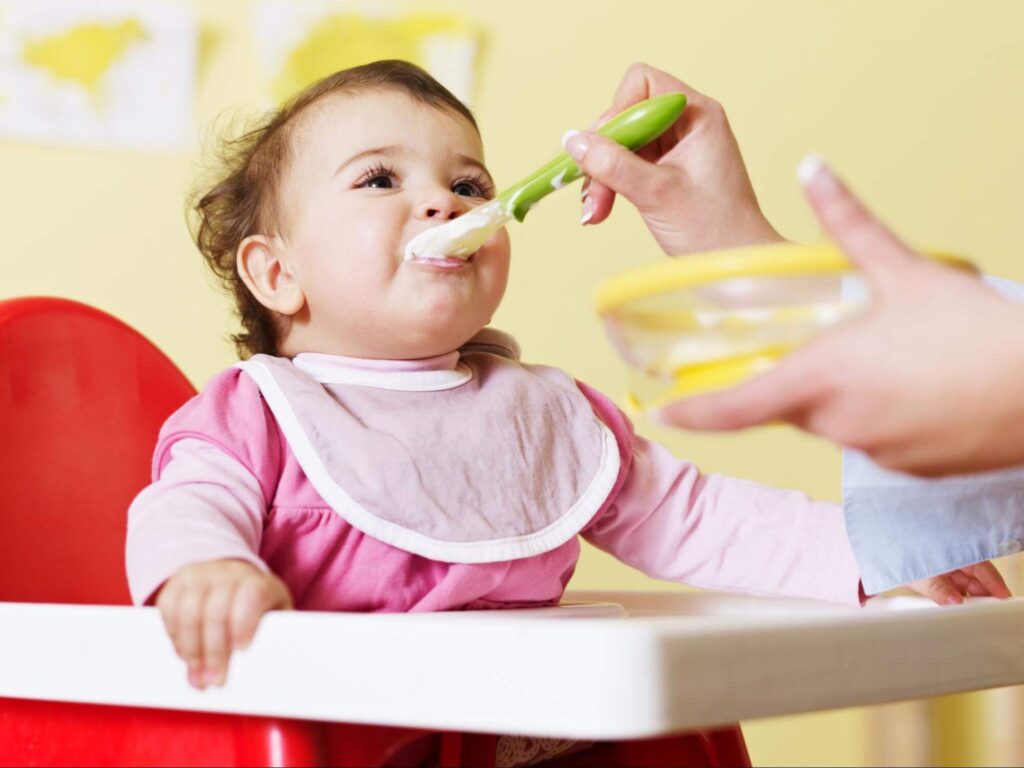
There’s no set age to start your baby on solid food – you need to watch your baby for signs of readiness not the calendar.
For most babies it will be around 4-6 months.
Signs your baby is ready to start solids:
My advice is the same as it’s always been.
Don’t look at the calendar, look at your baby – they will tell you.
Remember there is NO right or wrong answer here; child development is a fluid process and every family and baby is different – for most babies it will be somewhere between 4-6 months.
From approximately 4 months of age, start looking for – and recognising – the signs of evolving readiness.
These include:
- more frequent night waking and catnapping during the day
- your baby watching you more intently when you are eating and seeming more interested
- reaching for food as you try to eat
- opening their mouth when you offer them something to hold
- putting objects in their mouth more often
- have lost the tongue-thrust reflex that pushes food back out of the mouth
Babies do NOT need trunk control (ie: sitting independently) to be able to start solids, only need head control and can be safely fed in a ‘fitted’ high-chair or parent’s lap, etc.
What they do need is good head and neck control.
Their head shouldn’t be ‘toppling’ around or slumping forward. There is a safety risk if their head is slumped then this can increase the risk of choking.
The benefits of starting solids at the first sign of readiness
In the Dr Golly Sleep Program I recommend introducing solids as soon as your baby is showing signs of readiness. This is often earlier than most parents anticipate – start looking from 4 months onwards.
The benefits of starting early are significant:
- Firstly, it can take several weeks of practice to eat solid foods before your baby is confidently taking decent volumes of solids at each meal, meaning it could be a while before they’re taking in enough calories to provide adequate energy to last the night.
- Secondly – international allergy guidelines point to strong evidence that we can reduce the lifetime risk of allergies by introducing common allergens (triggers) in a window between 4 to 6 months.
So delaying solids has the potential to increase the chances of having allergies to things like nuts, eggs or dairy.
Wait ….don’t baby’s need to be exclusively breast fed until 6 months? Doesn’t the WHO say this?
This is a really hot button topic – I’ve written a very comprehensive position paper on the global research and recommendations on why I’m happy to advise parents to start solids any time from 4 months onwards – as long as their baby is showing signs of readiness.
Remember, solids at this stage are considered ‘complements’ to milk be it breast milk or infant formula milk, not replacement. Breast milk or formula is still the most important part of their nutritional intake so it is an opportunity for baby and parents to learn about different smells, textures and flavours.
The Dr Golly Sleep Program aligns with The Australasian Society of Clinical Immunology and Allergy (ASCIA) in recommending no solids prior to 4 months.
The WHO guideline was projected to save more than 820,000 infant lives annually – an incredible figure, BUT infants differ in the age they are ready for solids, and every breastfeeding mother differs in the amount of milk able to be produced.
This is why it’s important to look for signs of readiness/hunger in your baby, not a specific age.
What types of puréed food to start with?
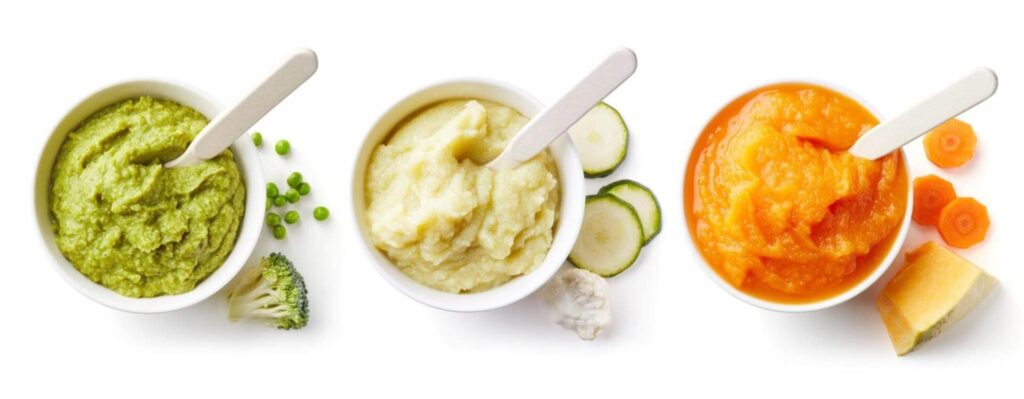
- Start with purees of fruit and vegetables such as sweet potato, pumpkin, carrot, peas, zucchini, pear and apple.
- Be careful not to quickly introduce too many foods that can cause wind in babies, like green beans, cauliflower or broccoli.
- Infant cereal is also a great first food; it should be iron-fortified.
- Particularly for vegetarian/vegan families, the iron-rich plant-based foods are very high in fibre so need to be introduced a bit more delicately. Test legumes early but don’t give them in high volumes until your baby is closer to 8-9 months as they can make them too gassy.
Families can get caught up in being too systematic with the way they introduce baby foods – what I love to see is families eating the rainbow and making their own baby food by simply portioning off small parts to puree or mash for their baby.
Healthy foods aren’t just for our babies – healthy food habits start with us as parents.
Introduce NEW foods regularly & eat the rainbow
Try to only introduce one new food at a time before mixing and combining different flavours. You don’t have to be too prescriptive about this for the entire list, just give single foods as you get started.
Lots of parents love a list to tick off – if this isn’t for you just go with the flow but it can be very handy to see what you’ve tried and tested and what you haven’t particularly if there are multiple carers introducing solids.
You can download my free starting solids checklist here:
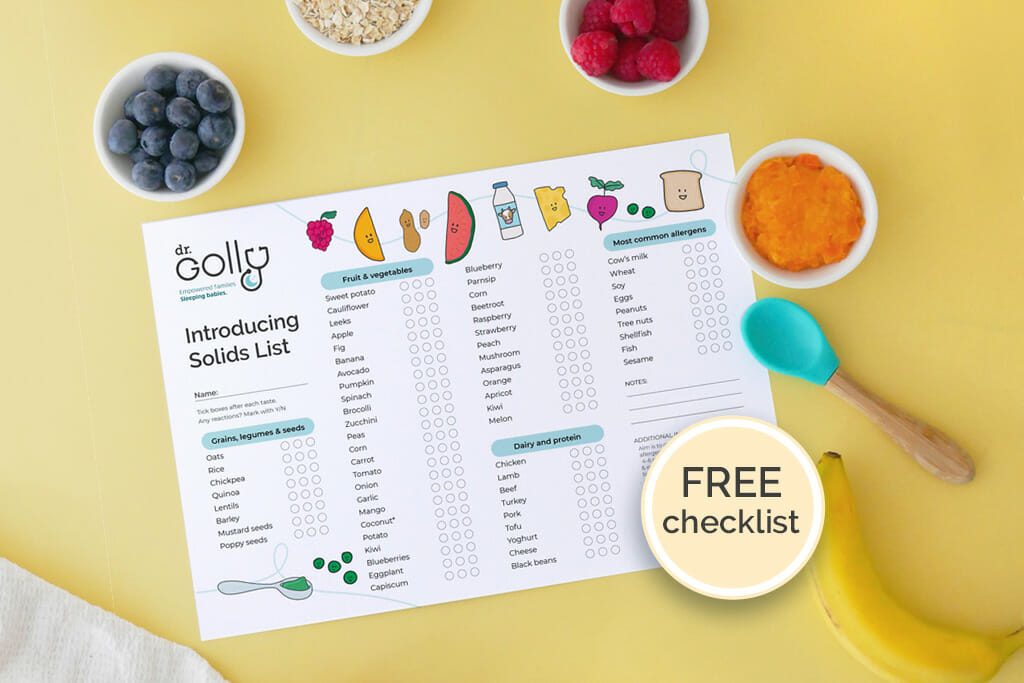
We want to teach our babies and kids to love food and set up healthy eating habits for life – so let them explore, have fun and make a mess. Don’t get stress about volume intake as they learn, it’s not a race, enjoy the process with them.
What is Baby-led weaning?
Baby-led weaning is a completely novel approach to starting solids. It involves skipping the pureed-food stage and moving straight to small solids or finger foods, which the baby manipulates and self-feeds.
Given the developmental needs required for this, babies will not be taking adequate solids volume until at least 8-9 months of age.
What’s the best approach to introducing solid foods – baby lead weaning or purees?
It’s important to follow the lead of each individual baby when you introduce solid foods and to use a combination of both conventional feeding techniques as well as baby-led weaning to help them build independence in feeding skills.
Feed your baby pureed food, while at the same time, letting them explore food independently, both pureed (yes, encourage a mess!) and more textured simultaneously.
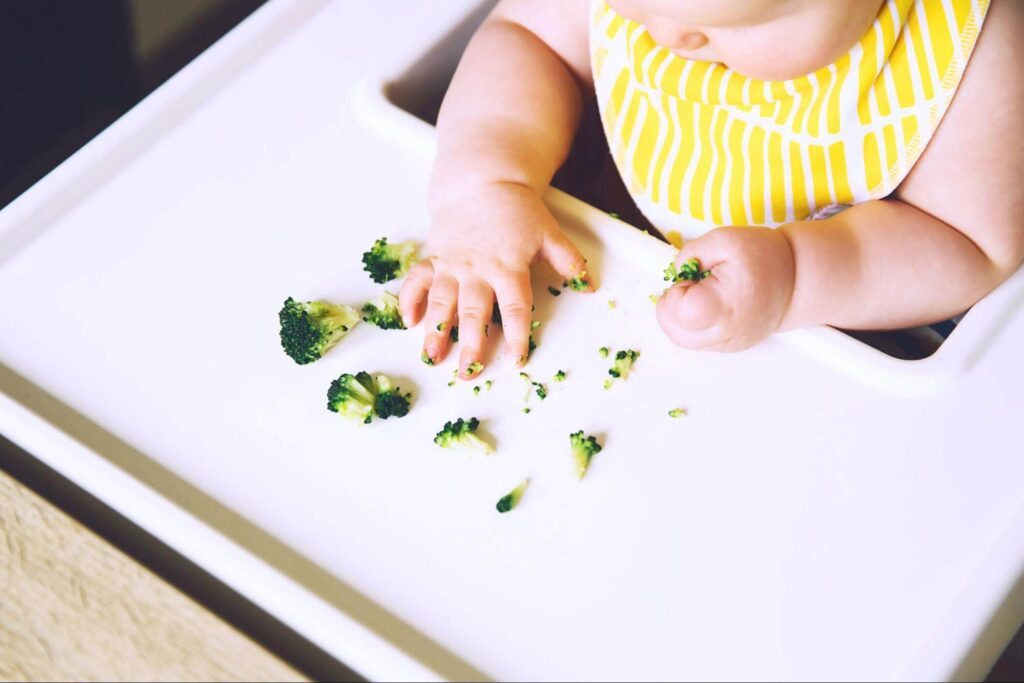
Remember: This requires close supervision, up-to-date baby first aid training and a willingness to have messy fun!
Make sure any finger food passes the “squish test” i.e. you can squish it easily between your fingers or it’s big enough it can’t be swallowed whole – like large watermelon rinds or larger bones to chew on.
Ensure texture is introduced as your baby grows.
As your baby starts to grow the texture will change from a smooth puree to a more lumpy mashed food.
When food texture does not progress with the development of your baby, they are not challenged to learn how to chew.
Studies have found that babies who were introduced to lumpy solids after the age of nine months ate less of the food groups at seven years old than those introduced between six and nine months old. So don’t be afraid to progress from purees to mash to more lumpy textures as you progress.
Cooled, boiled water should be introduced when children start on solids.
Just like all other foods, it can take some time to figure out how to drink water as it has a different viscosity to breastmilk or infant formula. I encourage small amounts of water to be offered in a sippy cup of some sort (lots of parents like the straw cups) but I recommend trying a few different sippy cups to find the one that suits the child best. As dexterity improves you’ll work towards a cup – get ready for lots of spills and splashes as they learn!
As we introduce solids, always remember breastmilk (or formula) will still be their major source of both nutrition and hydration.
Be aware of choking hazards
Food is one of the most common items babies and children choke on.
Avoiding items like in the first couple of years will minimise the risk of choking:
- popcorn,
- whole nuts,
- whole grapes,
- hard lollies and
- marshmallows
- hard carrots
Packet baby food
Baby solid foods that come in a jar packet/pouch food are amazingly convenient – they are affordable, sterile, mobile. It’s absolutely OK to use packet food, but we recommend you read the label.
We are yet to find one that has the recommended protein we advise for the lunch time feed. If you find one, tell us!
Never let a baby eat straight from the pouch
Spoon feeding utilises mouth muscles necessary for healthy growth and development, additionally, toddlers can learn how to use a spoon to build fine motor skills.
I always recommend using a spoon when feeding these packet purees. I’m not alarmist here – it’s ok for toddlers to ‘suck’ on these pouches occasionally (we’ve all forgotten a spoon on the run!). However, make sure before they do this they have started spoon-feeding themselves, eating finger foods, and drinking from a cup with minimal spilling before giving them to ‘suck’ on a pouch.
Food Allergies and Starting Solids
Food allergies are on the rise in developed countries, with significant public health impact. Serious allergy (anaphylaxis) can greatly hinder the quality of life for both children and parents.
What are the most common food allergens?
The 4 most common food allergies are:
- Cow’s milk
- Egg
- Peanut
- Tree nuts including cashew, walnut and pistachio
The next 5 in the cohort are still common compared to other food groups but far less so than the top 4, these are:
- Fish
- Shellfish
- Wheat
- Soy
- Sesame
Most children will outgrow a food allergy to egg, milk, soy and wheat – but it’s less likely they’ll grow out of allergies to nuts and seafood – though these may decrease in severity over time.
When should I introduce allergens?
- Advice from ASCIA (the allergy governing body) recommends introducing complementary foods (including introducing potentially allergenic foods) in the window of 4-6 months.
I’m a big advocate for introducing allergens in the 4-6 month window as it is associated with the lowest incidence of allergy for children.
In the Dr Golly Big Baby 4-8 months Sleep Programs we have a full guide for starting solids and testing allergens that your family can work through.
If you don’t have my sleep program a great resource is the NIP Allergies in the BUB website – PreventAllergies.org.au. It will step you through what is and isn’t an allergy reaction and how to respond if you have one.
Never rub food on your baby’s skin: Never rub food on your baby’s skin, especially in babies with eczema, as this may increase the chance of your baby developing a food allergy.
Managing eczema, like testing allergens early, are some of the key of the things we know we can do to help minimise the risk of allergies.
If you’re interested in digging deeper on this my position paper on starting solids goes deeper on this topic with a full list of references.
What are some other things to keep in mind when starting solids?
There are some specifics to remember:
- Honey should be avoided until 12 months of age (not for reasons of allergy, but due to the possibility of contamination with botulinum toxin – botox, which can be found in honey).
- Be up to date on first aid so you feel confident if something goes wrong – and remember to avoid those key choking foods mentioned above.
- Always approach starting solids with a sense of fun and don’t stress about the mess – it’s going to be messy, embrace it!
Top safety tips for solids
🥣 Ensure children always sit down quietly to eat.
🥣 Avoid giving hard chewy foods and small solid pieces of food to young children.
🥣 Grate, mash or chop these foods for children.
🥣 Remove bones from young children’s food.
🥣 Never force a distressed child to eat.
🥣 Turn off the television and other distractions off so you can focus on feeding
🥣 Cutting, mashing and grating foods are all ways you can help to reduce the risk as your baby/toddler learning to eat.
For more kids safety information see www.kidsafe.com.au